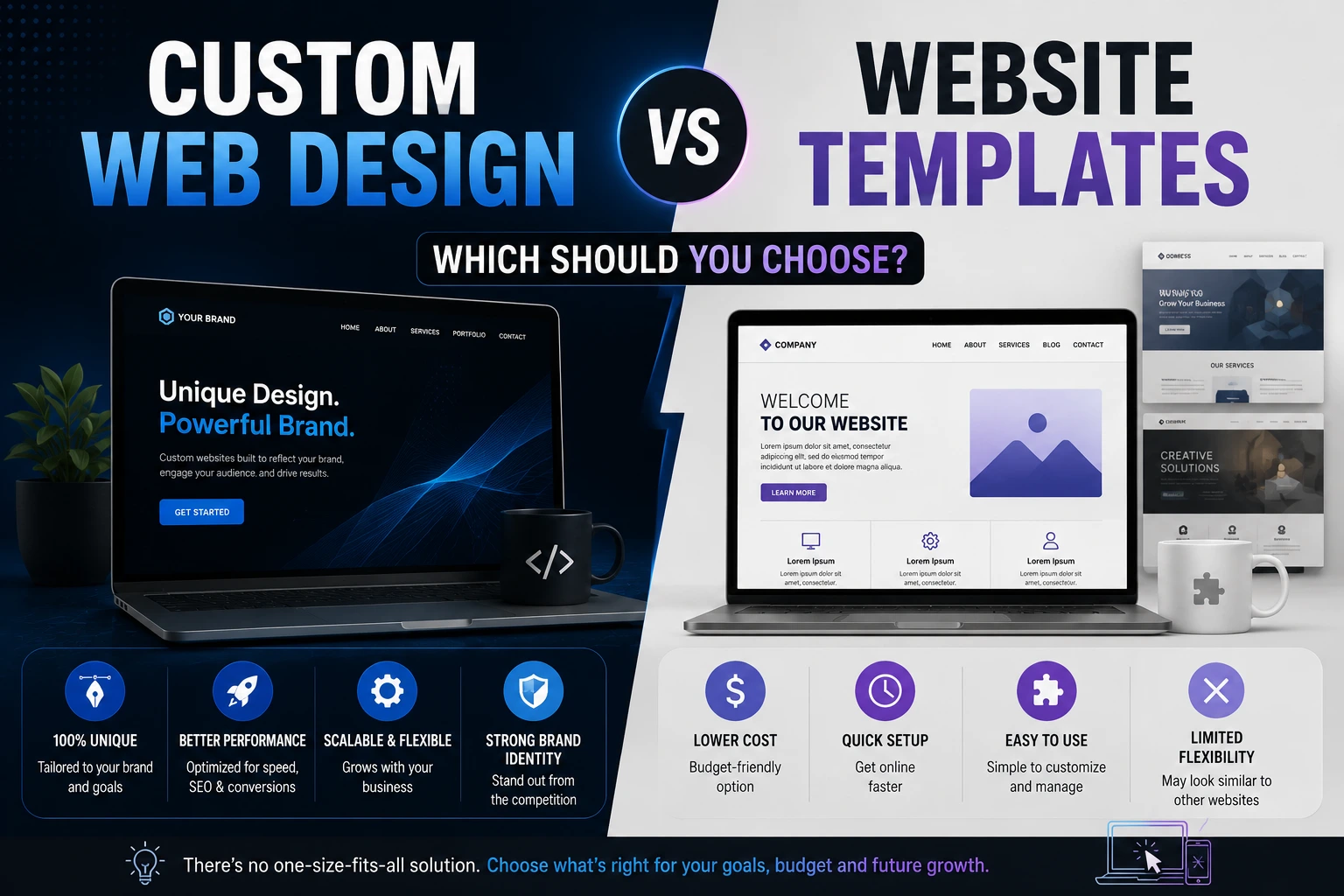
This is the question we get most from founders: should we build on WordPress like everyone else, or go custom with something like Next.js? The honest answer is that both are excellent, for different shapes of business.
When WordPress wins
If your site is content first, lots of articles, frequent editor updates, a marketing team that ships pages weekly without engineers, WordPress's editorial tooling is genuinely hard to beat. With good hosting and a disciplined plugin diet, it's fast and reliable.
When Next.js wins
If your site is product first, custom interactions, dashboards, ecommerce logic, integrations, or performance as a competitive edge, a Next.js build gives you complete control. There's no plugin ceiling, no theme constraints, and Core Web Vitals scores that templated stacks struggle to match.
- WordPress: content velocity, editor autonomy, proven ecosystem
- Next.js: performance ceiling, custom UX, engineering control
- Hybrid: headless WordPress feeding a Next.js frontend, both strengths, one stack
“Pick the stack that matches who updates the site every week, not the one that's trending on developer Twitter.”
Our rule of thumb: marketing sites with heavy publishing lean WordPress or headless; product experiences and conversion critical funnels lean Next.js. And when in doubt, the hybrid path keeps every door open.
Written from the trenches of real client projects at Xpanix.
Work with us