When planning a new website, one of the biggest decisions you'll face is whether to invest in a custom web design or use a ready-made website template. Both options can help you establish an online presence, but they serve very different purposes. The right choice depends on your business goals, your brand identity, and how you plan to grow in the future.
Many businesses are tempted by website templates because they're quick to launch and appear cost-effective. On the other hand, custom web design offers greater flexibility, stronger branding, and the ability to create a website that's built specifically around your business. Understanding the difference between these two approaches will help you make a decision that benefits your business in the long run.
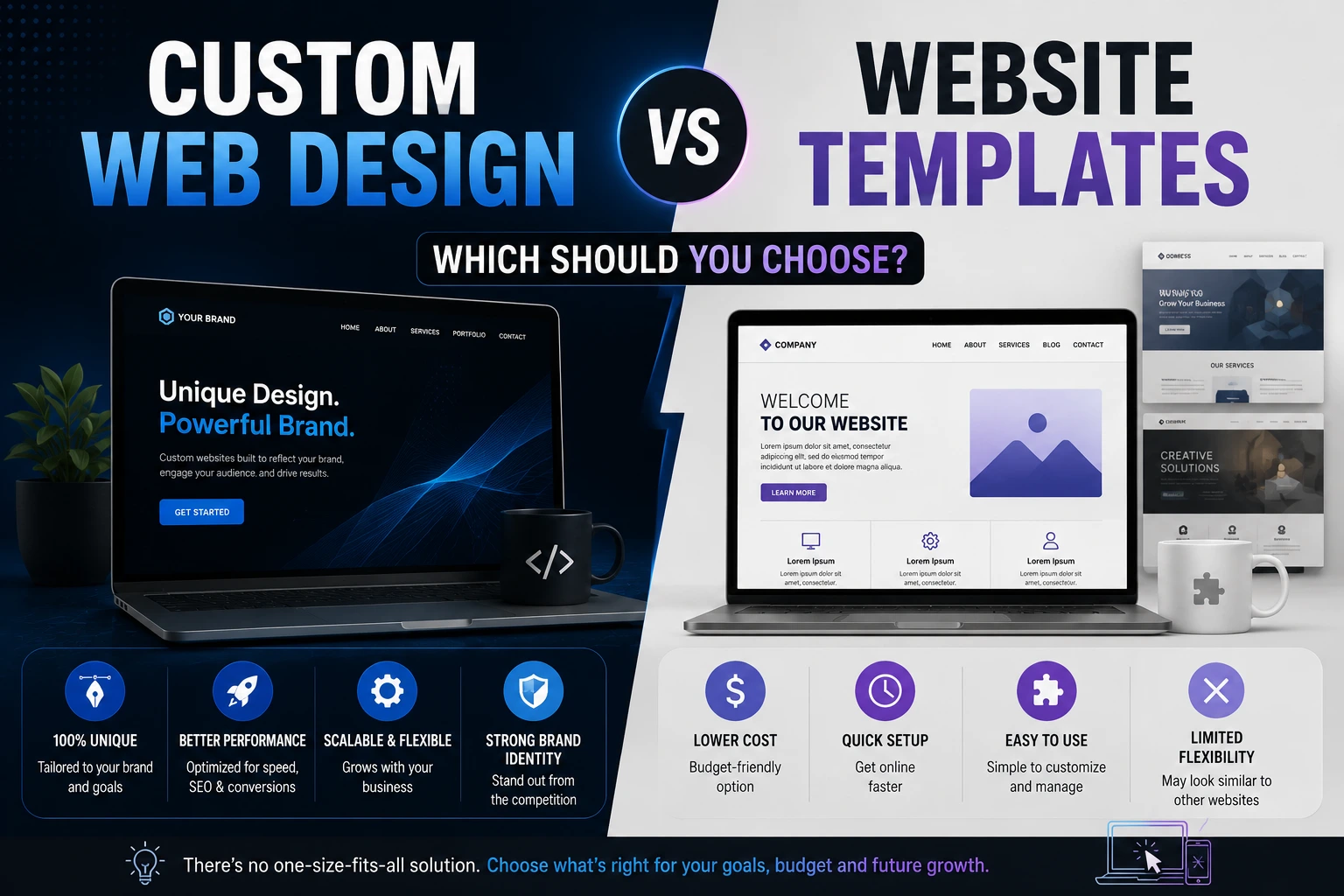
Website templates are pre-designed layouts that can be customized with your logo, content, and images. They provide a faster way to get a website online and are often a practical choice for startups or businesses that need a basic online presence. Since the overall structure is already designed, development usually takes less time, allowing businesses to launch their websites more quickly.
However, templates also come with limitations. Because they're created to work for a wide range of industries, they often lack the uniqueness that helps a brand stand out. You may also encounter restrictions when trying to add custom features, redesign certain sections, or improve the user experience. As your business grows, these limitations can make future updates more challenging.
Custom web design takes a completely different approach. Instead of adapting your business to fit an existing layout, the website is designed specifically around your brand, your audience, and your goals. Every page, interaction, and visual element is carefully planned to create an experience that reflects your business and guides visitors toward taking action.
One of the biggest advantages of custom web design is branding. Your website is often the first interaction customers have with your business, and a unique design helps create a lasting impression. From colour schemes and typography to layouts and animations, every element works together to communicate your brand's personality and build trust with potential customers.
Performance is another important factor to consider. Custom websites are typically built with only the features your business needs, which can result in cleaner code, faster loading times, and a smoother browsing experience. Website templates, on the other hand, often include numerous built-in features designed to satisfy different users. While these extra features may seem beneficial, they can sometimes affect performance if they aren't required for your project.
Search engine optimization should also be part of your decision. A professionally developed custom website gives developers greater control over the website's structure, page speed, metadata, and technical SEO. Although many modern templates offer SEO-friendly features, custom websites provide greater flexibility when optimizing for long-term search engine visibility.
Scalability is another area where custom websites have a clear advantage. Your business today may look very different a few years from now. You might introduce new services, launch an online store, expand into new markets, or create dedicated landing pages for marketing campaigns. A custom-built website is designed with growth in mind, making future updates much easier without rebuilding the entire website.
That doesn't mean website templates are a poor choice. For businesses with straightforward requirements, limited functionality, or short launch timelines, a professionally implemented template can still provide an attractive and functional website. The key is understanding its limitations before making your decision.
Rather than asking which option is better, ask which option is better for your business. If your website is simply intended to provide basic company information, a well-designed template may meet your needs. If your website is expected to generate leads, strengthen your brand, improve customer experience, and support long-term growth, investing in a custom web design is often the more strategic decision.
Choosing between a custom website and a template shouldn't be based solely on the initial investment. It's about considering where your business is today and where you want it to be in the future. A website that supports your long-term goals can deliver far greater value than one that simply helps you launch quickly.
Final Thoughts
Both website templates and custom web design have their place, and the right choice depends on your business objectives rather than a one-size-fits-all answer. Templates offer speed and simplicity, while custom websites provide flexibility, stronger branding, and room to grow.
Before making your decision, think beyond the launch date. Consider how your website will represent your business, support your marketing efforts, and adapt as your company evolves. The best website isn't necessarily the one that's built the fastest—it's the one that's designed to help your business succeed for years to come.
Written from the trenches of real client projects at Xpanix.
Work with us