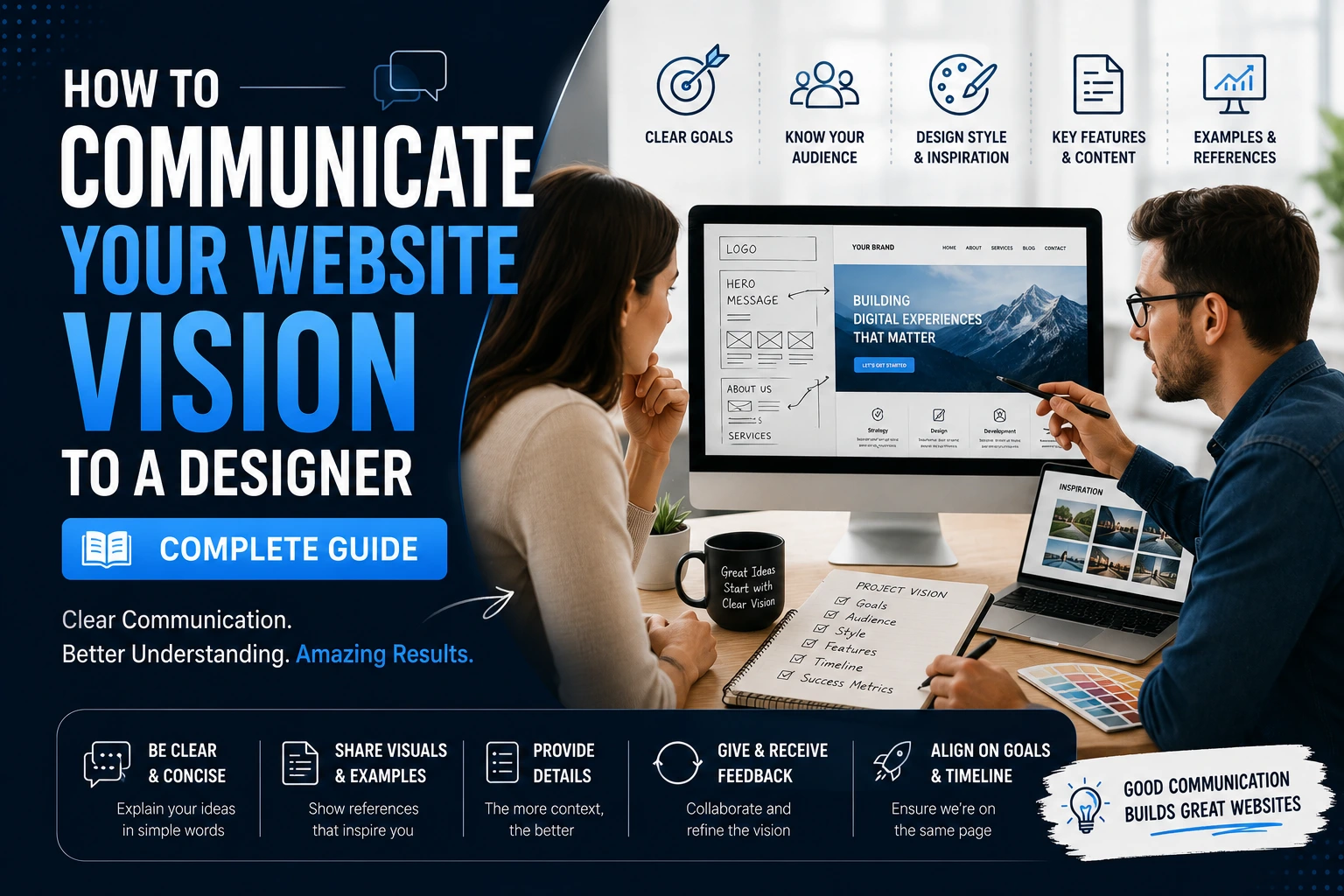
Building a website is a collaborative process. While a skilled web designer knows how to create an attractive and functional website, the final result depends just as much on how clearly you communicate your ideas. The better your designer understands your business, your audience, and your goals, the more likely they are to create a website that truly represents your brand.
Many business owners believe they need to have every detail figured out before contacting a designer. In reality, that's not necessary. What matters most is being able to explain what your business does, who your customers are, and what you want your website to achieve. Even a simple conversation about your vision can provide valuable direction for the entire project.
One of the best places to start is by explaining your business rather than your design preferences. Tell your designer what products or services you offer, what makes your business different, and who your ideal customers are. Understanding your business allows the designer to make decisions that support your objectives instead of simply creating something that looks attractive.
It's also important to be clear about the purpose of your website. Some businesses want to generate enquiries, while others want to showcase a portfolio, sell products online, or educate their audience through blog content. When your designer understands the primary goal of the website, they can create layouts and user journeys that encourage visitors to take the desired action.
Visual inspiration can be extremely helpful during the planning stage. If you've come across websites that you like, share them with your designer and explain what specifically caught your attention. It could be the clean layout, the typography, the colours, the navigation, or the overall user experience. This gives your designer a better understanding of your preferences without expecting them to copy another website.
Branding is another topic that should be discussed early in the project. If your business already has a logo, colour palette, typography, or brand guidelines, provide these resources before the design process begins. If your branding is still evolving, let your designer know so they can create a website that complements your future brand identity rather than limiting it.
Content is often underestimated, but it has a major influence on website design. Your designer will need to know what information should appear on each page, what services you offer, and how you want to communicate with potential customers. Even if your content isn't finalized, providing an outline or rough draft helps the designer create a structure that fits your messaging naturally.
You should also discuss the features your website needs from the beginning. Whether you require contact forms, appointment booking, product catalogues, customer login areas, blog functionality, live chat, or integrations with third-party tools, mentioning these requirements early helps avoid major changes later in the project. It's always easier to plan for functionality than to add it after the design has already been completed.
Another important conversation involves your long-term plans. Your business may be small today, but you might intend to expand your services, launch an online store, or target new markets in the future. Sharing these ambitions allows your designer to build a website that can grow with your business instead of requiring a complete redesign every time your needs change.
Throughout the project, honest and timely feedback is essential. Rather than saying you don't like a particular design, explain why it doesn't feel right. Perhaps the colours don't match your brand, the layout feels too busy, or the navigation isn't intuitive. Specific feedback helps your designer make meaningful improvements and keeps the project moving in the right direction.
Remember that a successful website isn't created through guesswork. It's built through collaboration, open communication, and a shared understanding of your business goals. The more information you provide, the easier it becomes for your designer to transform your ideas into a website that reflects your brand and delivers real value to your customers.
Final Thoughts
Communicating your website vision doesn't require technical knowledge or design expertise. It simply requires openness about your business, your audience, your goals, and the experience you want your visitors to have.
The best web design projects begin with meaningful conversations, not assumptions. When you and your designer work together from the start, the result is a website that not only looks professional but also supports your business objectives, strengthens your brand, and creates a better experience for every visitor.
Think of your web designer as a creative partner rather than just a service provider. The clearer your vision, the stronger the final website will be.
Written from the trenches of real client projects at Xpanix.
Work with us